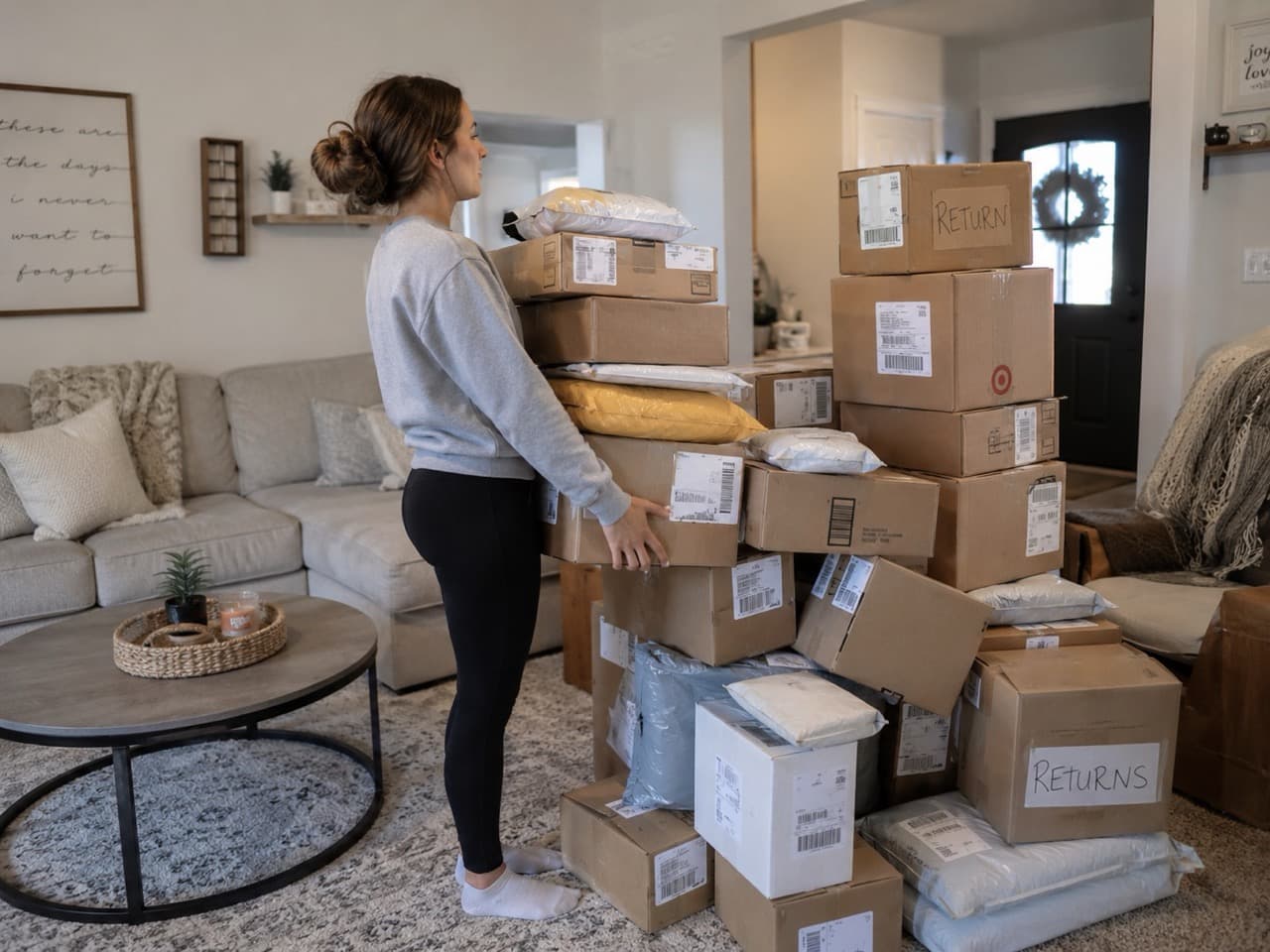
We've all done it. The jacket looked incredible on the model, so you ordered it—maybe in two sizes, just to be safe. A week later it arrives, you try it on, and… it's just not you. Now you're repackaging it, printing a label, and finding time to get to a drop-off point. Multiply that by every online order that didn't work out, and returns quietly become one of the most annoying (and increasingly expensive) parts of shopping online.
The good news: most returns are preventable. Below are seven practical ways to buy clothes online that actually look good on you—so you can stop wasting money, time, and packaging on the return cycle.
Why online clothing returns happen
Almost every return comes down to one of two things:
- It didn't fit. Sizes are wildly inconsistent between brands, and a "medium" at one store is a "large" at another.
- It didn't look right on me. The color, the cut, or the proportions that looked great on the model just don't translate to your body.
Both problems share a root cause: you're guessing. Fix the guessing and the returns mostly disappear.
7 ways to stop returning clothes you buy online
1. See the item on yourself before you buy
This is the single biggest lever. A virtual try-on tool lets you preview a piece on your own body right on the product page, so you catch "not for me" before you check out instead of after delivery. Quick Fit Check does this directly in your browser on the stores you already shop—no extra app, no screenshots.
2. Measure yourself and actually use the size chart
Spend five minutes with a tape measure on your chest, waist, hips, and inseam, and write the numbers down. Then compare them to the brand's size chart for each order rather than trusting your "usual" size.
3. Read reviews for fit feedback
Reviews are a goldmine. Look specifically for comments like "runs small," "size up," or "great for tall frames." Photos from other customers are even better—they show you how the item looks off the model.
4. Check the fabric and care label
Fabric determines drape, stretch, and how something will sit on you. A structured cotton behaves nothing like a clingy viscose. Read the material composition before you buy so there are no surprises.
5. Lean on brands you already know
Once you've found a brand whose sizing fits you well, it becomes a safe bet. You don't have to shop exclusively there, but knowing your size in a few trusted labels removes a lot of risk.
6. Resist the "order multiple sizes" habit
Bracketing—ordering several sizes to send most back—feels safe, but it guarantees returns, ties up your money, and is increasingly something retailers penalize. If you've measured and previewed the item, you can usually commit to one size.
7. Build a wishlist and sleep on impulse buys
A surprising number of returns are just regretted impulse purchases. Save items to a wishlist and give yourself a day. If you still want it tomorrow, buy it. If not, you just avoided a return.
The bottom line
Returns aren't inevitable—they're a symptom of buying blind. Measure once, read the reviews, and most importantly, see the item on yourself before you commit. If you want help with that last part, Quick Fit Check shows you how clothes look on you while you shop, so more of what you order is something you'll actually keep. While you're at it, here are the best virtual try-on apps to try.
Frequently asked questions
Why do so many online clothing orders get returned?
The two biggest reasons are fit and look. The item either doesn't fit the way the size chart implied, or it simply looks different on a real body than it did on the model. Both are guesswork problems—and both can be reduced before you check out.
Do retailers charge for returns now?
Increasingly, yes. Many retailers have introduced return fees or deduct return shipping from your refund, so the 'free returns' era is fading. That makes it more valuable than ever to get the order right the first time.
How does virtual try-on reduce returns?
Virtual try-on lets you see how an item looks on your own body before you buy, so you catch the 'that's not for me' moment on the product page instead of after the package arrives. It mainly solves the 'looks different on me' problem; you should still check the size chart for fit.
