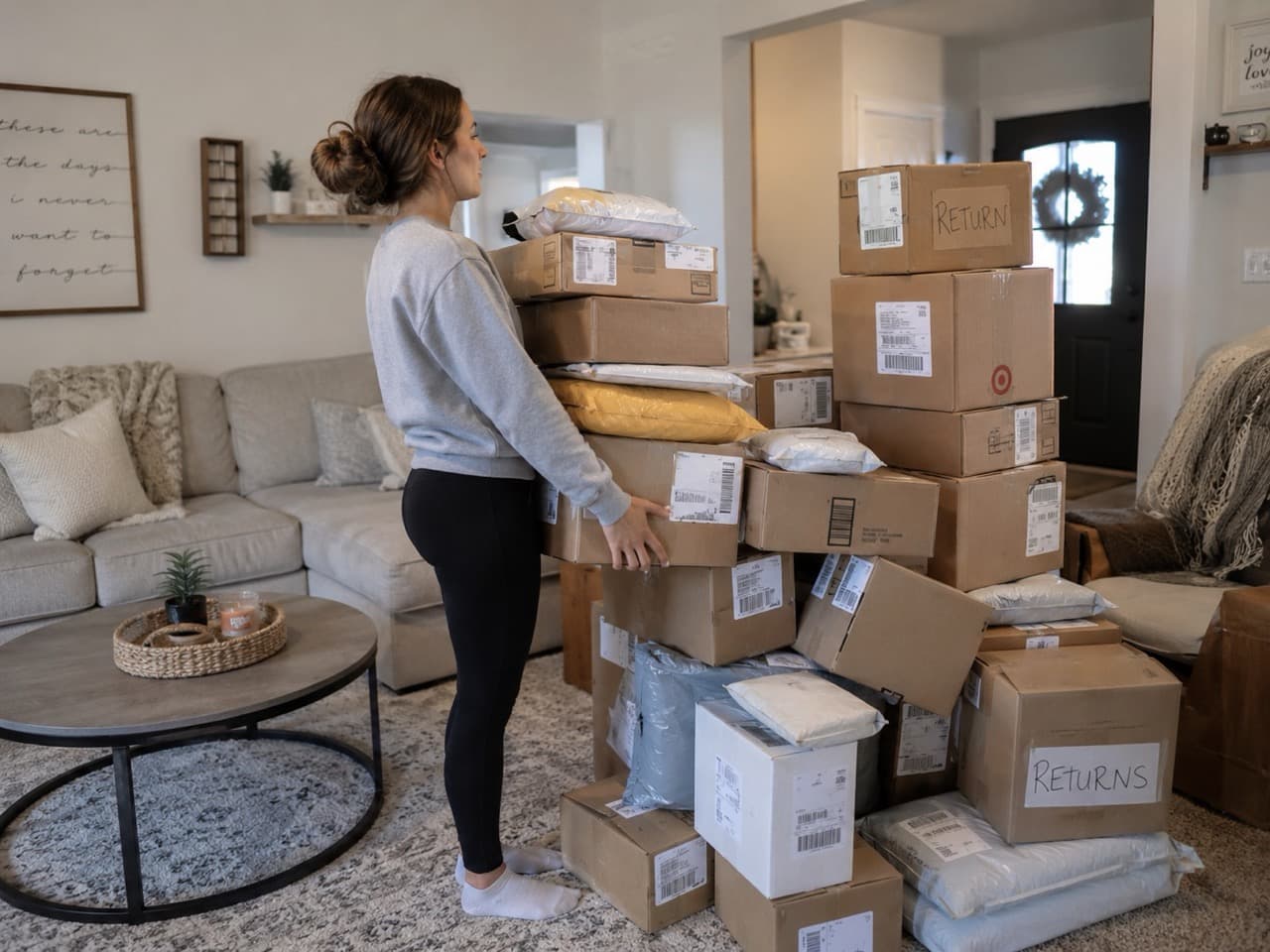
Online clothing returns have quietly become one of retail's biggest headaches—and one of the most relatable shopper frustrations. Here are the latest 2026 numbers on how often clothes get sent back, why, and what it all costs, with sources you can cite.
Online clothing return statistics at a glance
- ~20% of all ecommerce orders are returned on average; for apparel it's higher, around 20–40%.
- Online apparel returns hit an all-time high of about 24.4% in 2025 (National Retail Federation).
- Clothing and shoes are the most-returned online category (Statista).
- Fit and sizing drives an estimated 53% to 70% of apparel returns (Prime AI; McKinsey).
- Bracketing—ordering multiple sizes to return most—is now practiced by a majority of shoppers, up from ~40% in 2018.
- The virtual try-on market is projected to grow from $12.1B in 2025 to $15.3B in 2026 (26.5% CAGR), reaching ~$38.9B by 2030.
How high are clothing return rates?
High, and climbing. While the average return rate across all ecommerce sits near 20%, apparel routinely lands in the 20–40% range, and the National Retail Federation pegged online apparel returns at an all-time high of about 24.4% in 2025. Statista's data consistently ranks clothing and shoes as the most-returned online purchase category—ahead of electronics and everything else.
Why do people return clothes?
Two reasons dominate, and they're worth separating because they call for different solutions:
- Fit and sizing (the #1 reason). Estimates range from about 53% of returns (Prime AI) up to 70% (McKinsey), with some fashion studies citing incorrect sizing in as many as 77% of cases. Inconsistent sizing between brands is the core culprit.
- Appearance—"it looked different on me." The next major bucket is the look: a color that read differently in person, a cut that flattered the model but not the shopper, a silhouette that wasn't what the photo promised. We dig into this in why clothes look different on you than on the model.
The distinction matters: sizing returns are a measurement problem, while appearance returns are a preview problem—shoppers simply couldn't see the item on their own body before buying.
The bracketing problem
Free returns trained a generation to buy defensively. Bracketing—ordering the same dress in two or three sizes (or colors) intending to keep one—is now a mainstream habit for the majority of online shoppers, up sharply from roughly 40% in 2018. It guarantees returns by design and inflates the numbers above.
What returns actually cost
Returns are expensive for everyone in the chain:
- Retailers eat shipping, inspection, repackaging, and markdowns—often making returned apparel unprofitable or unsellable.
- The planet absorbs the carbon of round-trip shipping and the waste of returned goods that end up in landfill rather than back on the shelf.
- You pay in time, occasional restocking fees, tied-up money awaiting refunds, and the sheer hassle of repackaging and drop-offs.
Can virtual try-on reduce returns?
For the appearance half of the problem, yes. By letting shoppers preview how an item looks on their own body before ordering, virtual try-on directly targets "it looked different on me" returns—which is why 65% of Gen Z say they're more likely to buy from brands that offer it, and why industry reports cite meaningful return reductions where try-on is deployed.
The honest caveat: try-on tackles the look, not the fit. It doesn't measure you or pick your size, so sizing-driven returns still depend on good size charts and reviews. Used together—try-on for appearance, size chart for fit—they cover the two biggest reasons clothes go back. See why virtual try-on is for style, not sizing for the full picture.
The takeaway
Apparel returns are high, costly, and rising—driven mainly by sizing, with a large secondary chunk from items that simply didn't look as expected. You can't fix inconsistent sizing, but you can erase the guesswork on appearance. Add Quick Fit Check to Chrome to preview clothes on yourself before you buy, and read how to stop wasting money on returns for the full playbook.
Frequently asked questions
What is the average online clothing return rate?
Apparel return rates run roughly 20–40% of online orders, far above the ~20% average across all ecommerce. The National Retail Federation reported online apparel returns hit an all-time high of about 24.4% in 2025—clothing is consistently the most-returned online category, per Statista.
Why do people return clothes bought online?
Fit and sizing is the number-one reason—estimates range from about 53% of returns (Prime AI) to as high as 70% (McKinsey). The next biggest bucket is appearance: the item looked different, or didn't suit the shopper, once it arrived.
What is bracketing in online shopping?
Bracketing is ordering several sizes or colors of the same item intending to keep one and return the rest. It's now a mainstream habit practiced by a majority of online shoppers, up from roughly 40% in 2018, and it's a major driver of rising return volumes.
Can virtual try-on reduce returns?
It can help with the 'it looked different on me' returns by letting shoppers preview the look on their own body before buying. Industry reports cite meaningful return reductions where try-on is used. It does not address sizing—that still depends on size charts—so it tackles the appearance half of the problem, not fit.
